City Real Estate Decision Page

Surrey

A growing Metro Vancouver city shaped by Surrey Central, SFU Surrey, KPU, townhouses, and car-oriented routines.

A large and fast-changing Metro Vancouver city where Surrey Central, education nodes, townhouse supply, and transit expansion need to be read separately by neighbourhood.
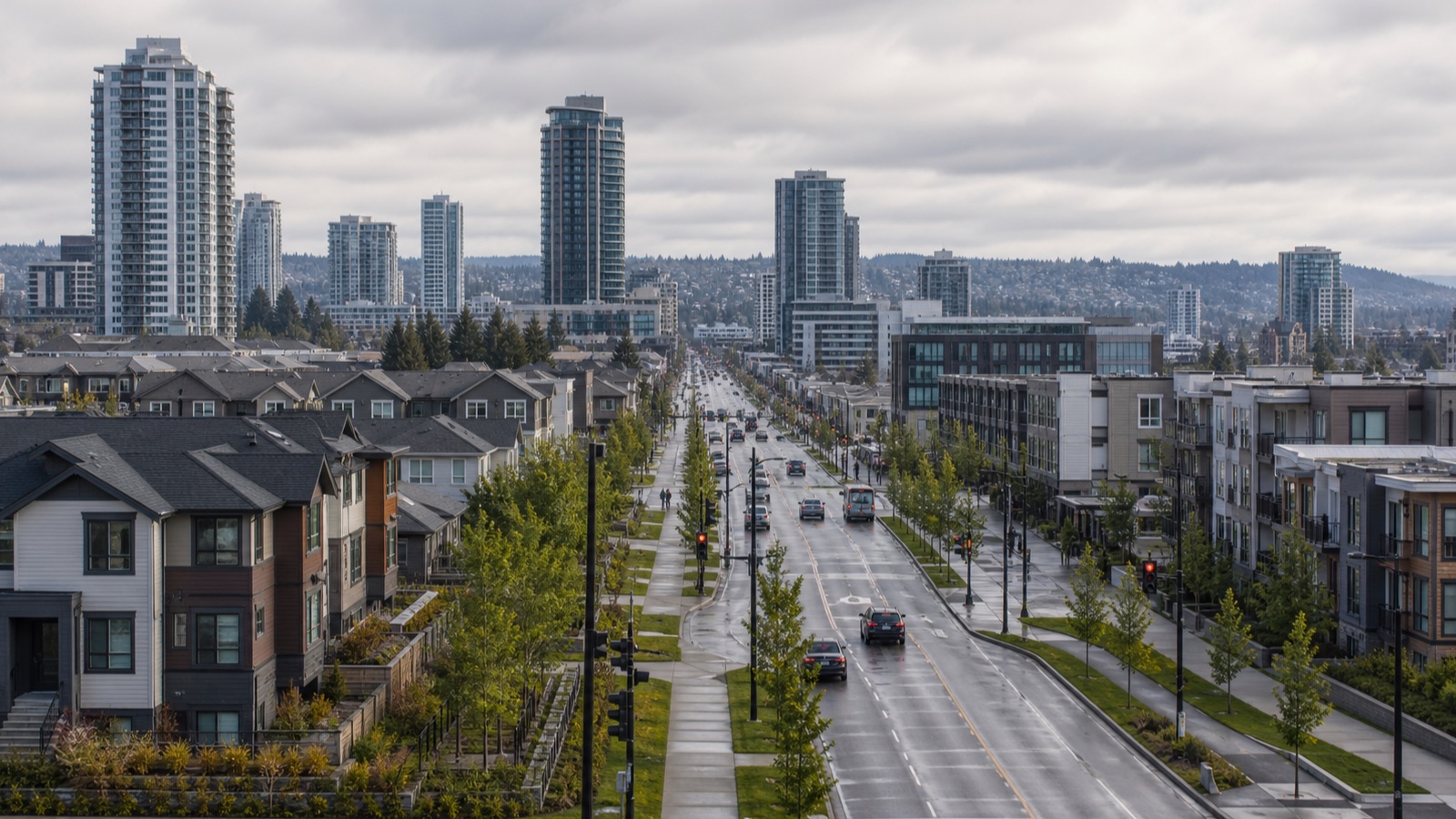
Surrey housing decision visual

The Real Estate Decision Problem in This City

A growing Metro Vancouver city shaped by Surrey Central, SFU Surrey, KPU, townhouses, and car-oriented routines.

Budget-aware Metro Vancouver households
Readers studying SFU Surrey, KPU, and Surrey Central growth
Families comparing townhouses, condos, and detached options

Residential Subareas and Daily-Life Systems

  • Surrey Central: campus, transit, and retail node, but growth narratives must return to address evidence.
  • Guildford / Fleetwood: family needs, transit, and townhouse supply should be separated.
  • South Surrey: different pace and housing mix; do not treat Surrey as one market.

Housing Types and Buyer / Renter Profiles

  • Core condos and high-rise strata buildings require review of fees, insurance, depreciation reports, and special levies.
  • Townhouses, duplexes, laneway homes, and multiplex options depend on zoning, permits, household use, and rental limits.
  • Detached and older homes need rain-season drainage, roof, basement, slope, and insurance review.

Holding Cost and Cash-Flow Risk

  • Transit expansion is not a guaranteed outcome for every address
  • Neighbourhood safety, commute, and housing type need local evidence
  • Student, family, and commuter rental demand should not be blended together

Commute and Daily Friction

  • Large geography creates very different commute, school, and grocery patterns
  • Surrey Central has campus, retail, and transit-node characteristics
  • Many households still need to account for car dependence and cross-city travel

Schools, Universities, Rentals, and Resale Demand

Buyer, Owner, and Landlord Checks

  • Municipal growth and transit project information
  • Neighbourhood-level data, insurance, and property documents
  • SFU Surrey / KPU campus and commute information
  • Verify property transfer tax, municipal property tax, and vacancy or speculation-style policies from current official sources.
  • Strata, short-term rental, laneway / multiplex, and permit status should not be inferred from listing copy alone.

Poor-Fit Profiles and Red Flags

  • Transit expansion is not a guaranteed outcome for every address
  • Neighbourhood safety, commute, and housing type need local evidence
  • Student, family, and commuter rental demand should not be blended together
  • Rain intrusion, underground parking, slope drainage, low-lying or riverfront sites, and wildfire smoke can affect insurance and maintenance decisions.

Related Reading

This page does not provide legal, tax, mortgage, insurance, tenancy, or investment advice. Policy, fee, school, transit, and insurance details can change; verify official sources and current documents.

Turn a City Impression Into Address-Level Questions

A city page can frame the research problem. Once you have an address, check title, permits, strata / condo documents, insurance, tax, leases, commute, and university information directly. PropertyLens helps organize questions and does not replace professional advice.

Create a PropertyLens Report

FAQ

Can this city page decide whether a specific address is worth buying?

No. It builds a local research framework. The final decision still needs the address, documents, budget, and professional review.

Does being near a university guarantee rental demand?

No. A university is only one demand context. Housing type, lease terms, vacancy, repairs, rules, commute, and renter profile still matter.

What does PropertyLens do in this city workflow?

It helps turn city-level concerns into address-level verification questions. It does not promise appreciation, rental success, financing, or compliance outcomes.