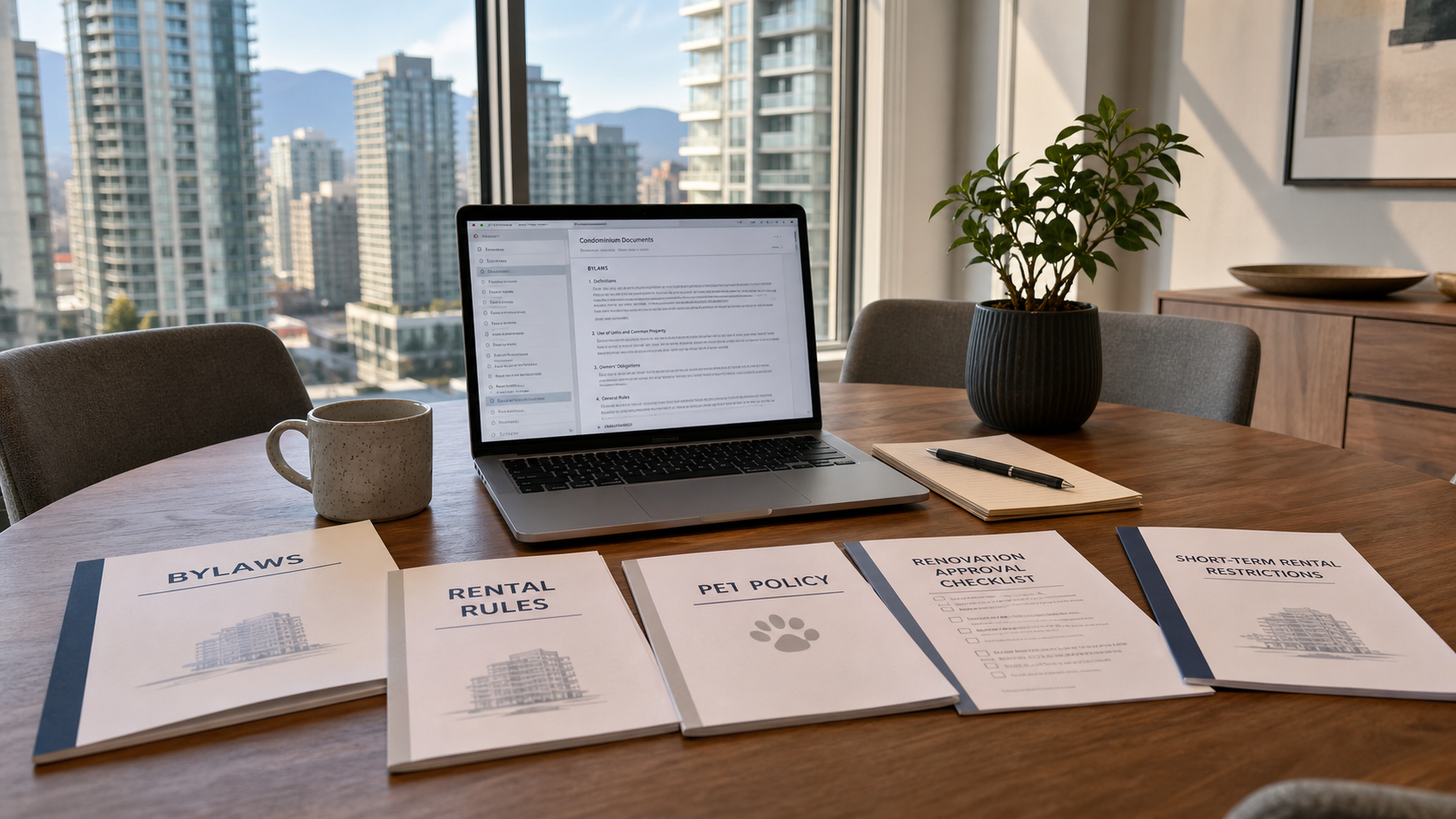
How to Read Condo Bylaws: Rental, Pets, Short-Term Rental and Renovation Limits
This article explains how buyers should read bylaws and rules as use restrictions, not boilerplate, and how those restrictions can affect living plans, rental plans, renovation, insurance and resale.
This article is organized from 6 public sources, last fact-checked 2026-08-11; full sources and review status appear after the article.
Research Notes and Decision Checklist
Key takeaways
- This article explains how buyers should read bylaws and rules as use restrictions, not boilerplate, and how those restrictions can affect living plans, rental plans, renovation, insurance and resale.
- Confirm the facts that apply to the specific property, city, and timing before relying on any general market observation.
- Bring unresolved legal, tax, financing, inspection, or insurance questions to the appropriate licensed professional.
Who this is for
Buyers, investors, families, and advisors who need a clearer way to organize Canadian real estate information before making a decision.
When to use PropertyLens
Use PropertyLens when you already have a target address and want a structured property report before deeper due diligence.
Decision checklist
- 1Identify the specific decision you are trying to make.
- 2Separate confirmed facts from assumptions that still need verification.
- 3Turn every unresolved issue into a follow-up question for the right professional.
Bylaws and rules are often treated as boilerplate, but they can directly affect whether a condo works for your life. A unit can look right on price and location while the bylaws make your intended use difficult.
Start with rental use. Check long-term rental rules, short-term rental restrictions, owner occupancy assumptions and whether municipal rules also apply. Do not assume a listing comment is enough.
Then check pets. Look for number, size, species, approval, nuisance and enforcement language. A pet-friendly building may still have limits that matter to a specific household.
Renovation rules are another major area. Flooring, plumbing, kitchen changes, balcony use, window coverings, air conditioning, EV charging, contractor access, deposits, insurance certificates and work hours may all be regulated. If your plan depends on renovating, confirm the process before relying on it.
Also review parking, storage, move-in fees, elevator booking, noise, smoking, BBQs, insurance responsibilities and owner repair obligations. These are not just lifestyle details; they can affect insurance, resale and conflict risk.
The practical rule is simple: bylaws are not background reading. They are use restrictions. If your purchase depends on renting, pets, renovation, parking or a specific daily routine, read the current bylaws and confirm the uncertain parts before removing conditions.
This article is general information only. It is not investment, legal, tax, mortgage, engineering, insurance, underwriting, compliance or transaction-specific advice. Before making a purchase or removing conditions, confirm current documents with a qualified realtor, lawyer, accountant, lender, insurance broker, inspector and other relevant professionals.
Sources and Fact-Check Status
- Form B: Information Certificate (Province of British Columbia · 2026-08-11)
- Budgeting and strata fees (Province of British Columbia · 2026-08-11)
- The contingency reserve fund (CRF) in strata corporations (Province of British Columbia · 2026-08-11)
- Preparing for a strata general meeting (AGM or SGM) (Province of British Columbia · 2026-08-11)
- Strata council meetings (Province of British Columbia · 2026-08-11)
- Strata depreciation reports: practical tips (Province of British Columbia · 2026-08-11)
Related Reading
Condo and Strata Risk
Related Hub
Canadian Home Buying Due Diligence
A structured reading path for Canadian buyers reviewing offer conditions, final walkthroughs, title searches, permits, insurance, closing costs, and legal friction before committing to a property.
Related Hub
PropertyLens Report Examples and Use Cases
A practical hub explaining how PropertyLens helps organize address, title, property, neighbourhood, cost, and risk questions before a buyer, investor, or advisor moves deeper into due diligence.
Condo and Strata
BC Strata Documents 101: What Form B, AGM, SGM, Minutes and CRF Mean
A plain-language starter guide for BC condo buyers who are seeing Form B, AGM, SGM, council minutes, CRF, budgets and depreciation reports for the first time.
Advisor Tools
What Strata Documents Should a BC Condo Buyer Ask the Realtor For?
A practical checklist of BC strata documents to request before subject removal, including Form B, minutes, AGM / SGM packages, financials, budget, insurance, bylaws and reports.
Condo and Strata
Condo Document Review Before Closing: Minutes, Reserve Fund, Insurance, Status Certificate, and Special Levies
A condo document review guide for buyers checking minutes, budgets, reserve funds, depreciation reports, insurance, status certificates, Form B, and special levy risk before closing.
InsightEstate.CA
Return to Property Intelligence Lab for more Canadian real estate research and practical analysis.