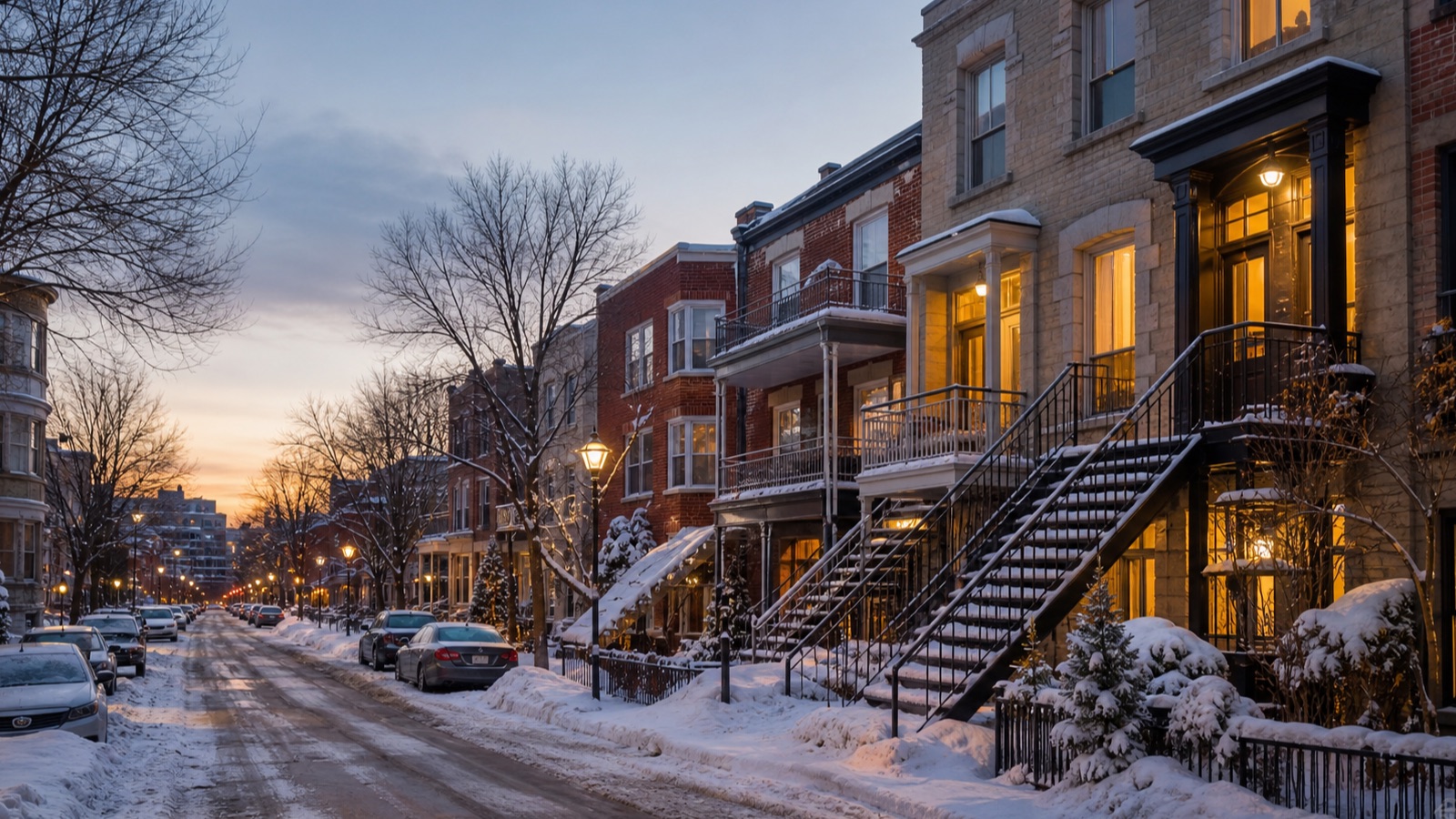
Montreal Condo Duplex and Triplex Market Guide
This guide explains 房型比較 in Quebec, turning regional character, climate, food, housing type, and document risk into a verifiable next-step checklist.
This article is organized from 6 public sources, last fact-checked 2026-07-08; full sources and review status appear after the article.
Research Notes and Decision Checklist
Key takeaways
- Start with daily radius before price narratives.
- Provincial rules are the first layer; address documents decide the file.
- Regional character enters ownership cost through climate, commute, repairs, and insurance.
Decision this article helps with
Decide whether Quebec 房型比較 fits the household, documents, and cash reserve.
When to use PropertyLens
Use PropertyLens when you already have a target address and want a structured property report before deeper due diligence.
Decision checklist
- 1Build a document folder with source dates.
- 2Assign unresolved items to the right professional.
- 3Confirm insurance, financing, and legal issues before committing funds or removing conditions.
This article is not trying to answer whether Quebec is a good place to buy in a universal sense. It turns 房型比較 into a practical decision sequence for households comparing ownership, renting, relocation, student-family logistics, or long-term holding responsibilities. The first step is to name the decision clearly before looking at taxes, tenancy rules, insurance, title records, commute patterns, and documents.
Quebec has visible regional character: Old Montreal stone streets, Metro and winter commute, duplex / triplex housing, maple and poutine, French-language documents. Those elements matter because housing decisions are also daily-life decisions. But the article does not treat landscape, food, or city reputation as proof of property quality. The useful question is how those regional conditions show up at the address level: winter travel, coastal exposure, older-building maintenance, insurance friction, access to services, or the difference between a central neighbourhood and a suburban routine.
The article uses conservative language. It does not promise price growth, rental demand, resale ease, financing approval, insurance acceptance, tax treatment, or legal compliance. A reader preparing to act should verify the details with provincial and municipal sources, CMHC and Statistics Canada context, a lawyer, mortgage professional, insurance advisor, home inspector, and a locally licensed real estate professional. The purpose is to organize questions before money, time, or legal responsibility is committed.
Start With the Decision, Not the Province Name
Before using Montreal Condo Duplex and Triplex Market Guide, the reader should reduce the question to one sentence: which city, housing type, daily-life radius, and downside scenario are being compared? Asking whether a province is broadly attractive is too loose to guide a purchase, lease, relocation, or holding decision. A more useful question is whether the household has enough evidence to keep moving forward under its budget, commute needs, family stage, lease timeline, and risk tolerance.
For an owner-occupier, the core issue is whether daily life can operate without constant friction. For a small landlord or cross-province owner, the issue is whether rules, documents, repairs, insurance, and cash reserves can be managed. For a student or accompanying family, the issue is whether the lease term, commute, campus backup, and household routine can be supported. Different answers point to different documents and different professional checks.
How Regional Character Becomes a Housing Question
Quebec is not only a line on a map. Its regional character includes Old Montreal stone streets, Metro and winter commute, duplex / triplex housing, maple and poutine, French-language documents. These elements are not decorative. They help the reader translate a regional impression into address-level questions. Winter, coastal exposure, prairie wind, harbour humidity, or city transit may affect roofs, exterior walls, basements, parking, insurance, and the reliability of daily routines.
The practical move is to turn every impression into a check. Does the address still work in winter? Are groceries, health care, schools, child care, or campus routes realistic for the household? If the building is older, who can estimate repairs and explain the condition? If it is a condominium or shared-property structure, do the documents explain future costs, rules, insurance, and governance clearly enough?
Documents, Taxes, and Rules Need Layers
Regional differences are rarely one simple rule. A Quebec decision can involve provincial rules, municipal rules, current documents, and the specific address. Official pages provide the framework, but they do not decide whether a particular title, lease, condo corporation, inspection result, or insurance file is acceptable.
Readers should preserve source dates, document versions, and professional replies. Listing copy, seller comments, landlord statements, and informal local experience can be useful clues, but they should not be treated as final evidence. When the question involves closing costs, tenancy responsibility, insurance availability, title limits, permits, shared-property governance, or tax treatment, the answer should come from the person or institution qualified to confirm it.
Daily Radius and Holding Cost
Many regional decisions look like price comparisons, but in practice they are daily-radius comparisons. Groceries, work commute, schools, health care, child care, winter roads, parking, public transit, repair labour, and neighbourhood services can decide whether an address is livable. A household that depends on driving should include vehicles, insurance, fuel or charging, parking, and weather delays in the budget. A household that depends on transit should check frequency, transfers, adverse-weather reliability, and the comfort of returning home at night.
Holding cost also extends beyond the mortgage payment. Property tax, insurance, heat, utilities, condo fees, maintenance, vacancy periods, moving, furniture, legal fees, inspection fees, and emergency cash reserves should be placed on one table. If the plan only works with immediate resale, immediate rental income, no repairs, or perfect market timing, the risk level should be raised.
How to Read This With Other Regional Guides
When comparing provinces, start with system-level questions such as tax, insurance, tenancy rules, title records, and transaction documents. Then move into city routines, commute, campus access, rental options, and family logistics. The first layer helps explain responsibilities; the second layer tests whether daily life can actually work.
When there is already a target address, the reading should become an address-level checklist. Note which documents have been received, which assumptions still need confirmation, and which questions belong with a lawyer, lender, insurer, inspector, accountant, or locally licensed real estate professional. The goal is not to collect more impressions; it is to turn each guide into a verifiable next step.
When the File Is Ready, and When to Slow Down
A file is more ready when the main documents have been obtained, the source dates are clear, the right professionals know what they are being asked to confirm, and the household has enough cash and time reserves. That does not mean the property has no risk. It means the risks have been seen, categorized, recorded, and reflected in conditions, price, lease terms, or the holding plan.
The file should slow down when key documents are missing, verbal statements conflict, insurance or financing has not been confirmed, tenancy responsibility is unclear, tax assumptions are unsupported, or the household can only carry the plan under an optimistic scenario. In that case, the next step is not to rationalize the gap. The next step is to assign the question, set a deadline, and define what happens if the answer is negative.
Practical Checklist
- Define whether the article is being used for ownership, rental, student-family housing, relocation, retirement, or long-term holding.
- Save provincial sources, municipal pages, CMHC / Statistics Canada background material, and professional replies.
- Review title, leases, condominium or shared-property documents, insurance, inspection, taxes, and permits as separate files.
- Add winter, coast, prairie, harbour, slope, commute, and repair-labour questions to the cost table.
- For every unresolved item, record the owner, deadline, decision impact, and fallback path.
Questions for Professionals
Avoid asking only whether something is allowed. Better questions are: does the current file support this conclusion? Could this issue affect financing, insurance, title, tenancy, tax, permits, or future resale disclosure? If the conservative scenario happens, how much time, cash, or backup housing should the household prepare? Should the answer be written into an offer condition, lease condition, closing instruction, or professional review note?
Professional roles should not be merged. Lawyers review contracts and title. Mortgage professionals review lender conditions. Insurance advisors review coverage, exclusions, and deductibles. Inspectors review visible condition and next inspections. Accountants review tax records. A locally licensed real estate professional can help explain regional context and transaction practice, but should not replace legal, tax, mortgage, or insurance advice.
Official Sources to Start With
- Housing markets, data and research (Canada Mortgage and Housing Corporation)
- Housing statistics (Statistics Canada)
- Buying a home (Financial Consumer Agency of Canada)
- Housing (Gouvernement du Québec)
- Tribunal administratif du logement (Tribunal administratif du logement)
- Buying and selling a property (Gouvernement du Québec)
FAQ
Does this article rank the best city or province?
No. It provides a decision framework. The final answer depends on the household, budget, address, documents, field checks, and professional advice.
Can provincial rules replace city and address checks?
No. Provincial rules are only the first layer. Municipal bylaws, property documents, insurance, title, lease terms, and physical condition can change the decision.
Where does PropertyLens fit?
Once there is a target address, PropertyLens can organize public information, address-level risk signals, and open verification questions into a report for professional follow-up.
Next Step
Turn Montreal Condo Duplex and Triplex Market Guide into a working checklist: purpose, address, documents, risks, professionals, and deadlines. If any key item cannot be confirmed before money is committed, conditions are removed, or a lease is signed, the safer move is to adjust terms, reduce exposure, or pause.
This article is general information only and does not constitute legal, tax, investment, mortgage, insurance, or individualized real-estate advice. Policy, fees, eligibility, insurance conditions, tenancy rules, tax treatment, and market conditions can change; verify current details with official sources, current documents, field checks, and qualified professionals before acting.
Extra Reading Notes for Careful Buyers
Regional articles are most useful when they are read slowly. A reader should not treat one paragraph about insurance, one note about tax, or one comparison between two cities as a final answer. Each item is a prompt for verification. In smaller markets, the next buyer pool may be narrower. In larger markets, the competition for well-located homes may be stronger, but that does not remove document risk. In university areas, campus demand can support rental interest, but the lease, property type, maintenance responsibility, and vacancy planning still matter.
For households relocating across provinces, it is especially important to separate familiarity from evidence. A neighbourhood that feels calm during a short visit may feel different in winter, during school drop-off, after a bridge delay, or when a repair contractor is hard to schedule. A cheaper purchase price may still come with higher travel time, insurance friction, heating cost, or future maintenance. A more expensive neighbourhood may still be the wrong fit if the building documents are weak or the daily routine does not work.
The best use of this article is to create a shared family document. One column should list confirmed facts. One column should list reasonable assumptions. One column should list unknowns. The final column should assign the unknown to a professional or official source. That simple structure prevents the household from accidentally treating hope as evidence. It also helps a lawyer, lender, insurer, inspector, or realtor understand what the family is actually trying to decide.
When a file feels rushed, ask what would need to be true for the decision to remain comfortable six months after closing or lease signing. If the answer depends on rent rising, prices increasing, repairs being minor, weather being kind, insurance being easy, or the next buyer sharing the same preference, the risk should be written down. Conservative planning is not pessimism; it is how a household preserves options while learning a new region.
A Province Checklist Should Become an Address Checklist
A province-level guide is only the beginning. The reader should eventually translate it into an address checklist with the exact street, legal description, property type, documents received, documents missing, and professionals responsible for review. If the target is a condo, that checklist should include corporation documents, reserve information, insurance, rules, minutes or equivalent records, and any known repair or governance concerns. If the target is a detached or low-rise home, it should include title, visible condition, permit questions, insurance availability, heating, drainage, roof age, and local service access.
The same approach applies to rental decisions. A lease should not be evaluated only by monthly rent. The tenant or landlord should look at term length, deposits, repair duties, notice requirements, winter or seasonal responsibilities, utilities, parking, furniture, subletting, and dispute-resolution path. For student or family rentals, timing matters: a lease that looks acceptable in May may create stress in August if moving, school, child care, or work schedules are not aligned.
What Makes a Regional Article Useful
A useful regional article does not need to predict the market. It should help the reader know what to verify next. The strongest sections are usually the practical ones: what documents to request, what professional to call, what local condition to inspect, what household routine to test, and what would cause the plan to pause. A reader should finish the article with a clearer list of questions, not with false confidence.
The article also needs to respect uncertainty. Public data often describes a city, province, or broad housing type, while a household is deciding on one address. That gap should never be hidden. A data source can help explain context, but the address may still have a different title issue, insurance file, permit history, noise pattern, repair need, or resale audience. The safest reading habit is to let broad data guide attention, then let current documents and field checks guide the decision.
How to Use This With PropertyLens
PropertyLens fits after the reader has a real address or a shortlist. It can help organize public information, neighbourhood context, property clues, and open questions. It should not be used as a promise that the address is safe, profitable, compliant, or easy to resell. The better use is to create a structured briefing: what looks known, what remains uncertain, and which professional should answer each unresolved item.
For families comparing regions, the workflow can be simple. First, read the province page to understand the system. Second, read market and document articles to identify tax, tenancy, insurance, and climate checks. Third, read local-life articles to test daily routines. Fourth, use PropertyLens on shortlisted addresses. Fifth, bring the report and the unresolved questions to qualified professionals. This sequence keeps the decision practical without pretending that one article can replace due diligence.
Final Decision Discipline
The last step is decision discipline. A household should decide in advance what would cause it to proceed, renegotiate, wait, or walk away. That threshold should be written before emotion, competition, or sunk cost becomes too strong. If the household cannot name the threshold, it is not ready to treat the file as low risk.
Good regional research gives the reader more patience and more precision. It helps people enjoy the local character of a place while still asking hard questions about documents, weather, maintenance, law, taxes, insurance, and daily life. That is the point of this article: not to sell a province, but to help readers move through it with clearer eyes.
Three Household Scenarios to Test
The first scenario is the owner-occupier who expects to stay for several years. This reader should test commute, schools or child care, groceries, health care, winter routines, repair capacity, and whether the home still works if family needs change. The second scenario is the small landlord or owner who may rent the property later. This reader should test tenancy rules, vacancy planning, repairs, insurance, tax records, and whether the property type is manageable from day one. The third scenario is the relocating household that does not yet know the region well. This reader should test temporary housing, local services, professional contacts, weather, transportation, and whether a slower purchase timeline would reduce risk.
Each scenario can lead to a different answer for the same address. A house that is reasonable for a local owner-occupier may be too management-heavy for a remote owner. A condo that is convenient for a student may not be flexible enough for a growing family. A lower purchase price may help one buyer and create maintenance pressure for another. The article should therefore be used as a sorting tool: identify the scenario first, then ask which documents and field checks matter most for that scenario.
Sources and Fact-Check Status
- Housing markets, data and research (Canada Mortgage and Housing Corporation · 2026-07-08)
- Housing statistics (Statistics Canada · 2026-07-08)
- Buying a home (Financial Consumer Agency of Canada · 2026-07-08)
- Housing (Gouvernement du Québec · 2026-07-08)
- Tribunal administratif du logement (Tribunal administratif du logement · 2026-07-08)
- Buying and selling a property (Gouvernement du Québec · 2026-07-08)
Related Reading
Condo and Strata Risk
Financing and Affordability
Vancouver vs. Toronto Affordability War: Decoding the "Price-to-Reality" Gap for Investors
Vancouver and Toronto consistently top global "bubble" and affordability charts. This analysis moves beyond headlines to compare the underlying fundamental drivers in Canada’s two most expensive cities.
PropertyLens Workflow
Canada Real Estate Data Guide: What Buyers Can Check Before Trusting a Listing
Canada Real Estate Data Guide: What Buyers Can Check Before Trusting a Listing. A source-aware decision guide covering risk factors, household fit, document gaps, and professional verification steps.
PropertyLens Workflow
PropertyLens Before Offer Workflow: Turning an Address Report into Offer Conditions and Professional Questions
A decision-oriented guide to how to use an address-level report before writing conditions or speaking with professionals, with evidence checks, professional questions, risk tiers, and a PropertyLens workflow.
InsightEstate.CA
Return to Property Intelligence Lab for more Canadian real estate research and practical analysis.