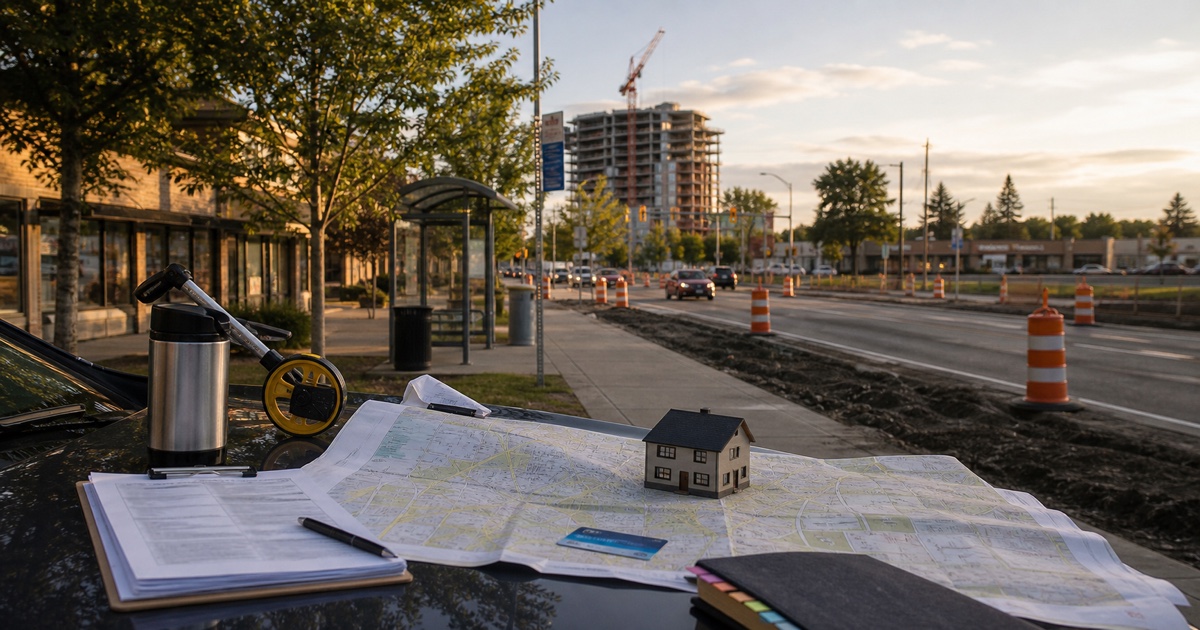
The North Delta Re-Emergence: Analyzing the infrastructure Dividend of Scottsdale Over the next 5 Years
A strategic investment analysis of the North Delta Scottsdale area. Explores the impact of transit improvements, community revitalization, and infrastructure timelines on medium-term property appreciation.
Updated 2026-05-18
This article is organized from 6 public sources, last fact-checked 2026-05-28; full sources and review status appear after the article.
Research Notes and Decision Checklist
Key takeaways
- A strategic investment analysis of the North Delta Scottsdale area. Explores the impact of transit improvements, community revitalization, and infrastructure timelines on medium-term property appreciation.
- Confirm the facts that apply to the specific property, city, and timing before relying on any general market observation.
- Bring unresolved legal, tax, financing, inspection, or insurance questions to the appropriate licensed professional.
Who this is for
Buyers, investors, families, and advisors who need a clearer way to organize Canadian real estate information before making a decision.
When to use PropertyLens
Use PropertyLens when you already have a target address and want a structured property report before deeper due diligence.
Decision checklist
- 1Identify the specific decision you are trying to make.
- 2Separate confirmed facts from assumptions that still need verification.
- 3Turn every unresolved issue into a follow-up question for the right professional.

For years, North Delta—specifically the Scottsdale corridor—has been viewed as a quiet, budget-friendly alternative to Surrey or Richmond. However, 2026 marks the beginning of a major structural shift.
Supported by the North Delta Area Renewal Plan, this region is transitioning from a bedroom community into a transit-connected hub. For investors, this represents a rare "Infrastructure Dividend" opportunity.
Article Navigation
- The 5-Year Infrastructure Roadmap
- Price Support Logic: Accessibility vs. Affordability
- TOD Potential & Zoning Shifts
- Investor Advice: Site Selection Strategy
- Where the Infrastructure Dividend Is Real
- Frequently Asked Questions FAQ
The 5-Year Infrastructure Roadmap
The revitalization of Scottsdale isn't just a single project; it’s a coordinated investment in transit and livability.
| Project Phase | Estimated Completion | Impact on Property Value |
|---|---|---|
| Scott Road RapidBus Expansion | 2025–2026 | High: Reduced commute times to SkyTrain |
| Scottsdale Community Center Renewal | 2027 | Medium: Enhanced local amenities |
| Mixed-Use Commercial Corridor | 2028+ | High: Increased retail and service density |
Price Support Logic: Accessibility vs. Affordability
As core Vancouver prices push buyers further east, North Delta’s "Relative Value" increases. However, the true price driver is Accessibility.
[!IMPORTANT] The Effective Distance Rule: Property value is not determined by physical miles, but by "minutes to the SkyTrain." The new RapidBus connectors effectively "move" Scottsdale 15 minutes closer to the regional core, justifying a structural price adjustment.
TOD Potential & Zoning Shifts
Following the provincial mandate, North Delta is seeing increased density around transit nodes.
- Small-Scale Multi-Family: Bill 44 allows for 4–6 units on standard lots within the Scottsdale renewal area.
- Retail Synergies: New mixed-use developments are bringing professional services (medical, legal, tech) to the corridor, increasing local employment.
[!TIP] Investment Alpha: Look for older R1-zoned properties within 200m of the Scott Road transit stops. These represent the highest "Zoning Alpha" for future assembly or redevelopment.
Investor Advice: Site Selection Strategy
- Focus on the 8:2 Ratio: Target areas where owner-occupiers make up 80% of the street but 20% of the lots are under-utilized (large lot, small house).
- Infrastructure Lag: Buy during the construction phase of infrastructure projects, as the "Usage Adjusted" price typically spikes only after the ribbon is cut.
- Rental Demand: With the rising cost of Surrey townhomes, Scottsdale’s rental market is seeing a 5%–8% annual increase in demand from young families.
Frequently Asked Questions FAQ
Q1: Is the Scottsdale renewal already "priced in"?
A: Only partially. While listing prices have risen, the full impact of the transit connectivity won't be reflected until the service becomes operational and daily commute patterns change.
Q2: What are the risks of investing in North Delta?
A: The primary risk is the "Surrey Competition." Investors must ensure their property offers a distinct quality-of-life advantage or better transit access than newer builds in neighboring Clayton or Surrey City Centre.
Where the Infrastructure Dividend Is Real
Infrastructure upside becomes investable only when it changes daily behaviour. In Scottsdale, the strongest locations are not simply near a project name; they are the parcels where transit access, shopping convenience, school access, and arterial connectivity reduce friction for tenants and owner-occupiers.
Investors should map three rings. The first ring captures walkable retail and frequent transit. The second ring captures family housing with easier access to Surrey, Richmond, and New Westminster employment. The third ring may still benefit from broader perception change, but it needs a larger discount because the lifestyle improvement is less direct.
When underwriting, separate real completion milestones from planning language. Price should reflect what is funded, permitted, and visibly changing, while speculative future phases should be treated as optional upside rather than base-case value.
Q3: What makes infrastructure upside credible?
A: It is credible when transportation, employment access, retail depth, housing affordability, and resale liquidity improve together rather than relying on one project headline.
Extended Reading
- Surrey City Centre: High-Density Investment Logic or Suburban Bubble?
- BC Assessment vs. Real Sold Price: How to Navigate the Negotiation Gap
- The End of Single-Family Zoning: How BC Bill 44 (SSMUH) Reshapes Real Estate Investment
Next Steps
Identify the next growth pocket before the market catches up.
Get a North Delta Regional Growth Analysis →
About the Author: Regional Planning Consultant and investment strategist specializing in Metro Vancouver’s secondary hubs.
Disclaimer: This analysis is based on current municipal planning documents and market data. Future infrastructure timelines are subject to government adjustment.
Sources and Fact-Check Status
- TransLink Projects and Plans (TransLink Projects and Plans · 2026-05-28)
- City of Vancouver Planning, Urban Design and Sustainability (City of Vancouver Planning, Urban Design and Sustainability · 2026-05-28)
- BC Transit Planning (BC Transit Planning · 2026-05-28)
- CMHC Housing Market Information Portal (CMHC Housing Market Information Portal · 2026-05-28)
- Statistics Canada Housing Statistics Portal (Statistics Canada Housing Statistics Portal · 2026-05-28)
- CREA National Statistics (CREA National Statistics · 2026-05-28)
Related Reading
Vancouver and BC Regional Intelligence
BC Policy and Land Use
The Surrey City Centre Metamorphosis: From "Satellite City" to Metro Vancouver’s Second Core
Surrey is undergoing the most ambitious urban transformation in Western Canada. This article decodes the four pillars of value supporting Surrey City Centre’s "eastward shift" of power.
BC Policy and Land Use
The Industrial & Tech Frontier: Decoding the Langley-Abbotsford Expansion Corridor
As Metro Vancouver’s core runs out of land, the "Eastward Shift" to Langley and Abbotsford is creating the next decade of capital appreciation.
BC Policy and Land Use
New Westminster’s Return to Power: The Riverfront TOD and the Old City Renaissance
As the only city in the region with "five SkyTrain stations," New Westminster is leveraging riverfront redevelopment and TOD density to reclaim its investment allure.
InsightEstate.CA
Return to Property Intelligence Lab for more Canadian real estate research and practical analysis.