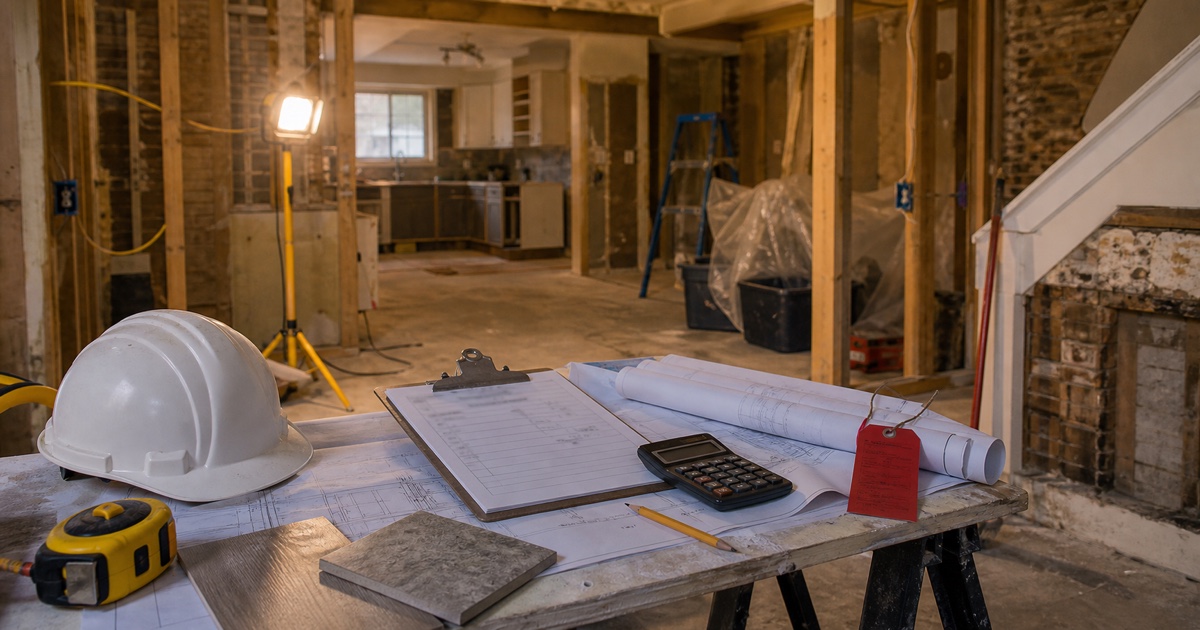
The Renovation Permit ROI: Controlling Costs and "Legalizing" Your Premium
A deep-dive into the decisive impact of building permits (BP, EP, DP) on property valuation and risk management during a renovation. Analyzes the financial delta between "permitted" and "non-permitted" work in the resale market, deconstructs the hidden costs of asbestos and electrical non-compliance, and provides a ROI roadmap for legal suite conversions.
Updated 2026-05-18
This article is organized from 3 public sources, last fact-checked 2026-06-02; full sources and review status appear after the article.
Research Notes and Decision Checklist
Key takeaways
- A deep-dive into the decisive impact of building permits (BP, EP, DP) on property valuation and risk management during a renovation. Analyzes the financial delta between "permitted" and "non-permitted" work in the resale market, deconstructs the hidden costs of asbestos and electrical non-compliance, and provides a ROI roadmap for legal suite conversions.
- Confirm the facts that apply to the specific property, city, and timing before relying on any general market observation.
- Bring unresolved legal, tax, financing, inspection, or insurance questions to the appropriate licensed professional.
Who this is for
Buyers, investors, families, and advisors who need a clearer way to organize Canadian real estate information before making a decision.
When to use PropertyLens
Use PropertyLens when you already have a target address and want a structured property report before deeper due diligence.
Decision checklist
- 1Identify the specific decision you are trying to make.
- 2Separate confirmed facts from assumptions that still need verification.
- 3Turn every unresolved issue into a follow-up question for the right professional.

In the BC real estate market, a "Renovation" can be a wealth-generator or a financial disaster. Work done without a Permit (No Permit) is not an improvement—it is a liability that leads to insurance denials and massive price "haircuts" during resale.
Article Navigation
- The Three Permitting Firewalls: Categories & Risks
- Cost Control: Managing the "Asbestos & Electrical" Surprise
- The ROI King: The Math of the Legal Suite
- Extended Reading
- Frequently Asked Questions FAQ
The Three Permitting Firewalls: Categories & Risks
You must distinguish between these levels to avoid a city "Stop Work" order:
- Building Permit (BP): Required for structural changes, significant window alterations, or changes in "use."
- EP/PP (Electrical & Plumbing): These are the core requirement for insurance audits. Replacing an outdated panel without an EP is a common cause for fire claim denial.
- Development Permit (DP): Required for exterior changes that impact the neighborhood character or OCP compliance.
Cost Control: Managing the "Asbestos & Electrical" Surprise
[!CAUTION] Hidden Contingency: In older homes, opening a wall almost always reveals asbestos or "knob and tube" wiring. Professional investors maintain a 15-20% Contingency Fund explicitly for these "Permit-required" code upgrades.
The ROI King: The Math of the Legal Suite
[!IMPORTANT] Analyst View: Spending $80,000 to "Legalize" a basement or coach house suite instead of doing it under-the-table adds roughly $150,000+ to your property value. Why? Because the bank can use 100% of the Legal Rental Income to offset your mortgage (Rental Income Offset), significantly boosting the buyer’s borrowing power.
Frequently Asked Questions FAQ
Q1: Do cosmetic changes (like new counters) need a permit?
A: Generally, no. But the moment you move a sink (plumbing) or add a high-power oven (electrical), you cross the permit threshold.
Q2: I bought a house with non-permitted work. What now?
A: This is a high-risk zone. You should consider "Legalizing" the work by hiring a certified inspector to review the work and apply for a retrospective permit, or ensure you disclose it fully during resale to avoid litigation.
Q3: Which renovations most need permit discipline?
A: Structural, electrical, plumbing, suite, envelope, and layout changes need the cleanest permit trail because buyers and lenders often ask for proof.
Extended Reading
- Strata Insurance Pulse: Why $100,000 Deductibles are Your New Financial Reality
- Tactical BC PTT Planning: Navigating Property Transfer Tax and Exemptions
- Vancouver West Side Catchment Depth: Why "The Line" Dictates Million-Dollar Premiums
Next Steps
Renovation is an art; but permitting is science. Ensure your asset is legally bulletproof.
Get Your Renovation Technical & Compliance Risk Assessment Report →
About the Author: Senior Project Manager and Development Specialist specializing in BC Building Code compliance and permit-driven asset value optimization.
Disclaimer: City bylaws vary significantly by municipality. Always consult a licensed contractor or urban planner before starting construction.
Sources and Fact-Check Status
- Building or renovating a home (Government of British Columbia · 2026-06-02)
- Buying a home (Financial Consumer Agency of Canada · 2026-06-02)
- Home energy efficiency (Natural Resources Canada · 2026-06-02)
Related Reading
Vancouver and BC Regional Intelligence
Renovation and Building Risk
The "Mortgage Helper" Trap: Why Illegal Suites Are a Growing Financial Risk in BC
Basement suites are the backbone of Vancouver housing, but "unauthorized" units carry hidden costs that can invalidate insurance and derail financing.
Due Diligence
Beyond the Walls: 3 Overlooked Title Search Details that Can Derail Your Investment
A home inspection checks the physical structure, but a Title Search checks the legal structure. This article reveals the "hidden burdens" that can cost you thousands.
BC Policy and Land Use
Assessed vs. Market Value: How to Weaponize the BC Assessment Gap in Price Negotiations
BC Assessment is a lagging indicator. This article explains how to obtain and interpret real-time transaction data to build an unshakeable negotiation case.
InsightEstate.CA
Return to Property Intelligence Lab for more Canadian real estate research and practical analysis.