University of Alberta Family Rental Guide: Garneau, Belgravia, HUB, LRT Access, and Edmonton Household Fit
A University of Alberta family rental guide comparing Garneau, Belgravia, HUB, LRT-linked areas, childcare, parking, winter commute, rent, and total household fit.
Updated 2026-05-18
This article is organized from 4 public sources, last fact-checked 2026-05-28; full sources and review status appear after the article.
Research Notes and Decision Checklist
Key takeaways
- A University of Alberta family rental guide comparing Garneau, Belgravia, HUB, LRT-linked areas, childcare, parking, winter commute, rent, and total household fit.
- Confirm the facts that apply to the specific property, city, and timing before relying on any general market observation.
- Bring unresolved legal, tax, financing, inspection, or insurance questions to the appropriate licensed professional.
Who this is for
Buyers, investors, families, and advisors who need a clearer way to organize Canadian real estate information before making a decision.
When to use PropertyLens
Use PropertyLens when you already have a target address and want a structured property report before deeper due diligence.
Decision checklist
- 1Identify the specific decision you are trying to make.
- 2Separate confirmed facts from assumptions that still need verification.
- 3Turn every unresolved issue into a follow-up question for the right professional.
The University of Alberta gives families a different housing question than UBC or SFU.
Why? Because Edmonton is a softer rental market than Metro Vancouver or Toronto, but the university’s most useful household options are still relatively limited and structured around student status.
Article Navigation
- Why UAlberta Family Housing Is a Distinct Problem
- What the University-Managed Apartment System Actually Changes
- When Campus-Edge Neighbourhoods Win
- When a Broader Edmonton Search Makes More Sense
- How to Read the Family Budget in Alberta
- Extended Reading
- Frequently Asked Questions FAQ
Why UAlberta Family Housing Is a Distinct Problem
UAlberta’s North Campus is surrounded by Garneau, Belgravia, McKernan, and Windsor Park, according to the university’s North Campus overview. That sounds simple on paper, but family housing around campus is really a three-part choice:
- a campus-managed apartment-style unit,
- a campus-edge neighbourhood with walkable or LRT-linked access,
- or a broader Edmonton rental search that trades proximity for more conventional household space.
This is also not a university that advertises a large dedicated student-family complex in the way some other Canadian campuses do.
That means most couples and student families are effectively deciding between a small set of institutional options and the private market.
What the University-Managed Apartment System Actually Changes
The most useful UAlberta-managed options for non-first-year households are spread across several buildings:
- Graduate Residence is for graduate students and uses an annual term lease ending on July 31 each year, with an 11-month first lease and 12-month renewals.
- HUB houses upper-year undergraduate and graduate students, and the university explicitly says student couples can live in 1-bedroom apartments there.
- Aspen and Maple House offers 1-bedroom apartments on month-to-month leases for upper-year undergraduates, while shared units run on academic contracts.
That does not create a huge family-housing inventory, but it does create lower-friction landing options for households that need campus integration, furnished setups, or simpler move-in logistics.
When Campus-Edge Neighbourhoods Win
Campus-edge neighbourhoods usually make sense when daily school access is still the center of household life.
Garneau is the clearest example. The City of Edmonton’s Garneau profile describes it as one of Edmonton’s oldest inner-city neighbourhoods, with apartment and row-housing redevelopment, student housing, fraternity houses, and commercial activity along 109 Street, Whyte Avenue, and 112 Street.
Belgravia and McKernan are different. Edmonton’s neighbourhood profiles describe them as more residential, with stronger low-density housing character and direct LRT access. Belgravia’s profile specifically notes that the LRT extension improved transit accessibility, while McKernan has an LRT stop at 76 Avenue and 114 Street.
For families, that usually means:
- Garneau for walkability and errands,
- Belgravia or McKernan for a calmer weekly rhythm,
- and campus-managed housing when lease friction matters more than neighbourhood identity.
When a Broader Edmonton Search Makes More Sense
A wider Edmonton search becomes stronger when the household is optimizing for total life structure rather than just a short walk to class.
That is especially true when:
- a spouse works downtown or elsewhere in the city,
- the family wants more conventional apartment stock,
- the student only needs periodic access to North Campus,
- or the household expects to stay beyond a simple academic-year frame.
Enterprise Square, the university’s downtown campus on Jasper Avenue between 102 Street and 103 Street, is also a reminder that not every UAlberta routine is locked to North Campus alone.
How to Read the Family Budget in Alberta
CMHC’s 2025 Rental Market Report says the Edmonton CMA purpose-built apartment market softened, with a 3.8% vacancy rate and an average 2-bedroom rent of CAD 1,603. The rented condominium apartment segment showed a 1.7% vacancy rate and an average 2-bedroom rent of CAD 1,655.
That softer market matters.
It means Edmonton families usually have more room to compare options than families near UBC, U of T, or McGill. But Alberta’s lease logic still matters:
- Alberta says a security deposit cannot be more than one month’s rent.
- Landlords must place that deposit in an interest-bearing trust account within 2 banking days.
- UAlberta residence applications require a CAD 25 non-refundable application fee and a CAD 500 residence deposit when a room offer is accepted.
[!IMPORTANT] UAlberta Family Rule: In Edmonton, the biggest family mistake is not “living too far away.” It is choosing a setup that looks affordable on paper but creates repeated weekly friction around campus access, partner commuting, and lease structure.
Family Rental Decision Framework
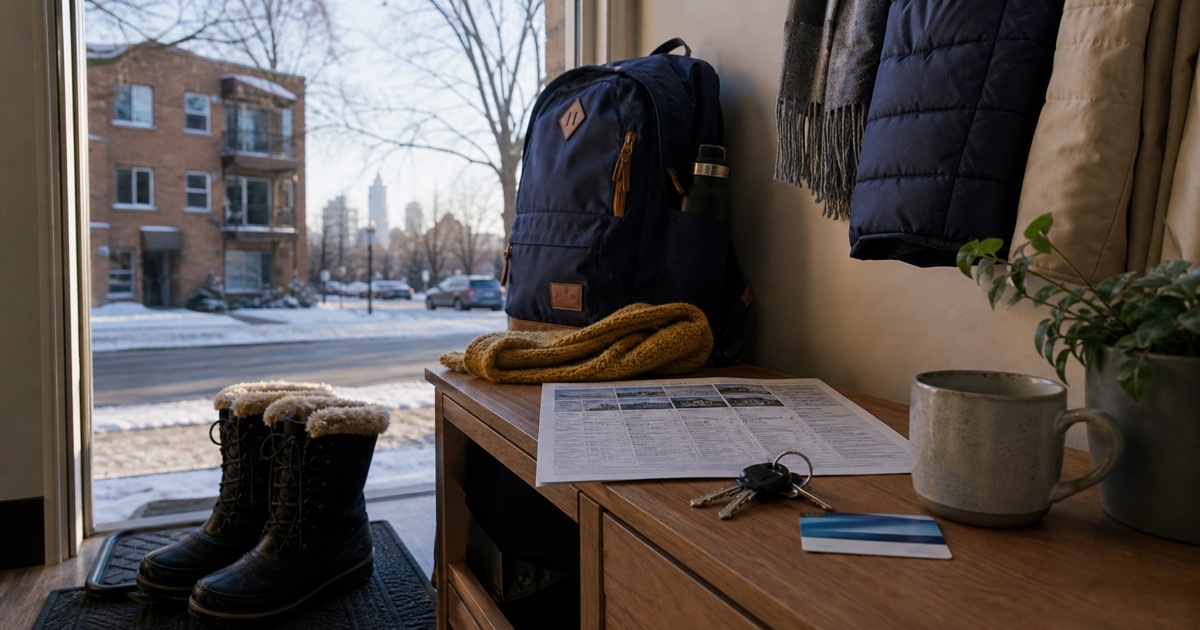
Start with the winter week: campus days, childcare or school needs, partner commute, groceries, parking, laundry, and LRT access. Edmonton can offer more space than Vancouver or Toronto, but poor winter logistics can erase that advantage quickly.
Near-campus areas buy time and reduce uncertainty. LRT-linked residential areas can buy value and space. The winning rental is the one with enough unit quality, commute reliability, and budget buffer to carry the household through the full academic year.
Extended Reading
- University of Alberta Graduate and Family Housing Guide: Graduate Residence, HUB, Aspen and Maple, and How the Apartment System Really Works
- University of Alberta Edmonton Neighbourhood Playbook: Garneau, McKernan, Belgravia, Windsor Park, Downtown, and LRT Logic
- University of Alberta Transit and Multi-Campus Commute Guide: North Campus, South Campus, Enterprise Square, and the U-Pass Logic
Frequently Asked Questions FAQ
Do UAlberta families need to live beside North Campus?
No. Proximity helps, but LRT-linked neighbourhoods or calmer residential areas may offer better total household fit.
Is HUB a family solution?
It may help some students, but families should verify current eligibility, unit type, noise, lease terms, and whether the layout supports household life.
What should families add beyond rent?
Heat, electricity, internet, tenant insurance, parking, transit, childcare, winter transportation, laundry, and furniture should all be budgeted.
Sources and Fact-Check Status
- University of Alberta Residence Services (University of Alberta · 2026-05-28)
- University of Alberta Residence Options (University of Alberta · 2026-05-28)
- University of Alberta Students’ Union U-Pass (University of Alberta Students’ Union · 2026-05-28)
- Alberta renting rights and responsibilities (Government of Alberta · 2026-05-28)
Related Reading
Canadian University Housing and Real Estate
Campus Family Rentals
University of Alberta Graduate and Family Housing Guide: Graduate Residence, HUB, Aspen, Maple, and Private-Market Backup Plans
University of Alberta graduate and family housing is useful, but applicants still need to compare eligibility, unit type, lease terms, LRT access, and Edmonton private-market backups. This guide explains how to build a resilient plan.
Campus Commute
University of Alberta Edmonton Neighbourhood Playbook: Garneau, McKernan, Belgravia, Windsor Park, Downtown, and LRT Logic
University of Alberta students should compare Edmonton neighbourhoods by LRT access, winter walking, rent, services, and campus routine. This playbook explains when Garneau, McKernan, Belgravia, Windsor Park, downtown, or farther areas fit best.
Campus Commute
University of Alberta LRT and Multi-Campus Commute Guide: North Campus, South Campus, Enterprise Square, U-Pass, and Winter Routing
University of Alberta housing decisions should be made around real commute patterns, not map distance. This guide explains LRT access, North Campus, South Campus, Enterprise Square, U-Pass logic, and winter travel risk.
InsightEstate.CA
Return to Property Intelligence Lab for more Canadian real estate research and practical analysis.