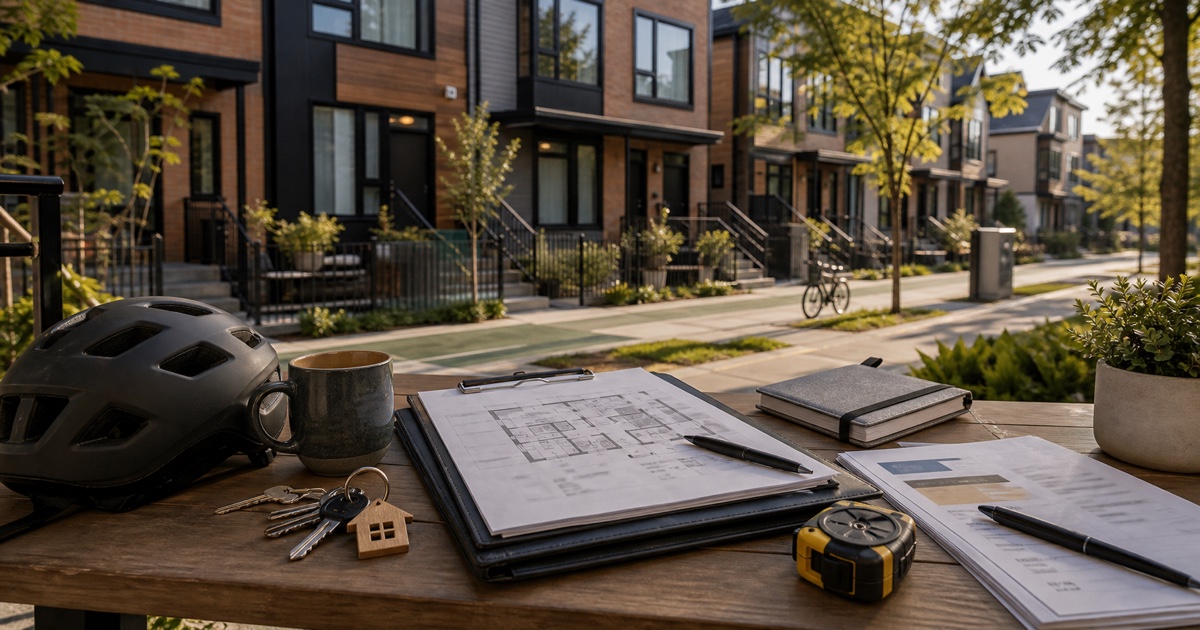
Townhomes, Duplexes, and Modern Living: How to Compare Space, Fees, and Future Flexibility
A practical guide for buyers comparing townhomes, duplexes, and other missing-middle housing forms. The article explains how to evaluate ownership structure, space efficiency, stairs, maintenance, parking, outdoor area, and resale flexibility.
Updated 2026-05-18
This article is organized from 2 public sources, last fact-checked 2026-06-02; full sources and review status appear after the article.
Research Notes and Decision Checklist
Key takeaways
- A practical guide for buyers comparing townhomes, duplexes, and other missing-middle housing forms. The article explains how to evaluate ownership structure, space efficiency, stairs, maintenance, parking, outdoor area, and resale flexibility.
- Confirm the facts that apply to the specific property, city, and timing before relying on any general market observation.
- Bring unresolved legal, tax, financing, inspection, or insurance questions to the appropriate licensed professional.
Who this is for
Buyers, investors, families, and advisors who need a clearer way to organize Canadian real estate information before making a decision.
When to use PropertyLens
Use PropertyLens when you already have a target address and want a structured property report before deeper due diligence.
Decision checklist
- 1Identify the specific decision you are trying to make.
- 2Separate confirmed facts from assumptions that still need verification.
- 3Turn every unresolved issue into a follow-up question for the right professional.
Townhomes and duplexes are often described as the practical middle ground between condos and detached houses. That can be true. They may offer more space, private entries, outdoor areas, and family-friendly layouts without the full cost of detached ownership.
But the category is not one product. A three-level strata townhouse, a half-duplex, a stacked townhouse, and a compact freehold rowhome can feel completely different in daily life.
Article Navigation
- Why Missing-Middle Housing Appeals
- Ownership Structure Changes the Risk
- Layout Matters More Than Square Footage
- Maintenance and Fee Trade-Offs
- Buyer Checklist
- Frequently Asked Questions FAQ
Why Missing-Middle Housing Appeals
Many buyers want more than a condo but cannot or do not want to buy a detached home. Townhomes and duplexes can answer that need by offering:
- ground-oriented living,
- more bedrooms,
- family storage,
- outdoor space,
- attached parking,
- better separation between work, sleep, and play,
- access to established neighbourhoods.
The appeal is real, especially for families, downsizers, and buyers who want less vertical density than a tower.
Ownership Structure Changes the Risk
Before comparing prices, identify what you are buying. A strata townhouse may include shared insurance, common-area maintenance, bylaws, reserve planning, and monthly fees. A duplex may involve shared walls, party-wall agreements, or separate maintenance responsibilities. A freehold rowhome may shift more responsibility to the owner.
The same floor area can carry different obligations depending on ownership structure.
Ask:
| Question | Why It Matters |
|---|---|
| Is it strata, freehold, leasehold, or another structure? | Determines fees, rules, and shared obligations |
| Who repairs the roof and exterior? | Major costs may be shared or private |
| Are rentals or pets restricted? | Affects use and resale |
| Is insurance shared or individual? | Changes deductible and claim exposure |
| Are there shared walls or easements? | Can affect privacy and maintenance |
Layout Matters More Than Square Footage
Townhome and duplex layouts often trade width for levels. A home can have enough square footage but still feel awkward if the stairs dominate daily routines.
Families should check:
- bedroom placement,
- main-floor bathroom access,
- stroller or mobility needs,
- storage for sports, bikes, and seasonal items,
- parking-to-kitchen distance,
- noise transfer through shared walls,
- usable outdoor space.
A compact layout that works every day is more valuable than a larger layout full of friction.
Maintenance and Fee Trade-Offs
Lower maintenance is one reason buyers choose attached housing, but fees and responsibility vary. A low strata fee may be attractive, or it may signal underfunding. A no-fee duplex may look cheaper, but owners must self-fund roofs, exterior repairs, drainage, and insurance.
The better comparison is total annual ownership cost.
Include:
- mortgage,
- property tax,
- strata or maintenance fees,
- insurance,
- utilities,
- reserve contributions,
- likely repairs,
- parking or storage costs.
Buyer Checklist
- Confirm ownership structure before comparing price.
- Review strata documents or shared-maintenance agreements.
- Walk the stairs and daily route with your actual household routine in mind.
- Check parking, storage, garbage, deliveries, and outdoor use.
- Ask how roof, exterior, drainage, and insurance claims are handled.
- Compare resale demand for the specific product type, not just the neighbourhood.
Extended Reading
- Smart Homes and Laneway Houses
- Large Lots and Multigenerational Homes
- BC Housing Evolution and Bill 44
Frequently Asked Questions FAQ
Q1: Is a townhouse closer to a condo or a detached home?
A: It depends on ownership structure and maintenance responsibility. Some townhomes feel condo-like, while others behave more like compact houses.
Q2: Are duplexes always cheaper than detached houses?
A: Usually they cost less than detached homes in the same area, but maintenance, land share, layout, and resale demand still need to be tested.
Q3: What should families check first?
A: Stairs, bedroom placement, storage, parking, outdoor space, noise transfer, and whether the layout will still work as children or parents age.
Next Steps
Townhomes and duplexes are strongest when they match real daily routines. Compare structure, not just style.
Compare townhome and duplex fit with PropertyLens →
About the Author: InsightEstate editorial team, specializing in family housing and ownership-structure due diligence.
Disclaimer: This article is general information, not legal, strata, insurance, or investment advice. Review ownership documents with qualified professionals before buying.
Sources and Fact-Check Status
- Housing markets, data and research (Canada Mortgage and Housing Corporation · 2026-06-02)
- Buying a home (Financial Consumer Agency of Canada · 2026-06-02)
Related Reading
Condo and Strata Risk
Lifestyle Housing
Smart Homes, Laneway Houses, and Missing Middle Housing: What Buyers Should Check First
Smart-home features and laneway potential can improve comfort and flexibility, but buyers need to verify permits, building-code compliance, utility capacity, privacy, and resale demand before pricing them as guaranteed upside.
Ownership Records
Large Lots and Multigenerational Homes: How to Compare Space, Zoning, and Carrying Costs
Large lots can support family flexibility, gardens, suites, or future intensification, but buyers need to check zoning, maintenance, tax, insurance, and resale demand before paying a space premium.
BC Policy and Land Use
BC Housing Evolution: Bill 44, Missing Middle Density, and What Buyers Should Verify
BC housing policy is pushing more small-scale multi-unit housing, but buyers and owners still need to verify local zoning, lot constraints, servicing, timelines, and economics before pricing density upside.
InsightEstate.CA
Return to Property Intelligence Lab for more Canadian real estate research and practical analysis.