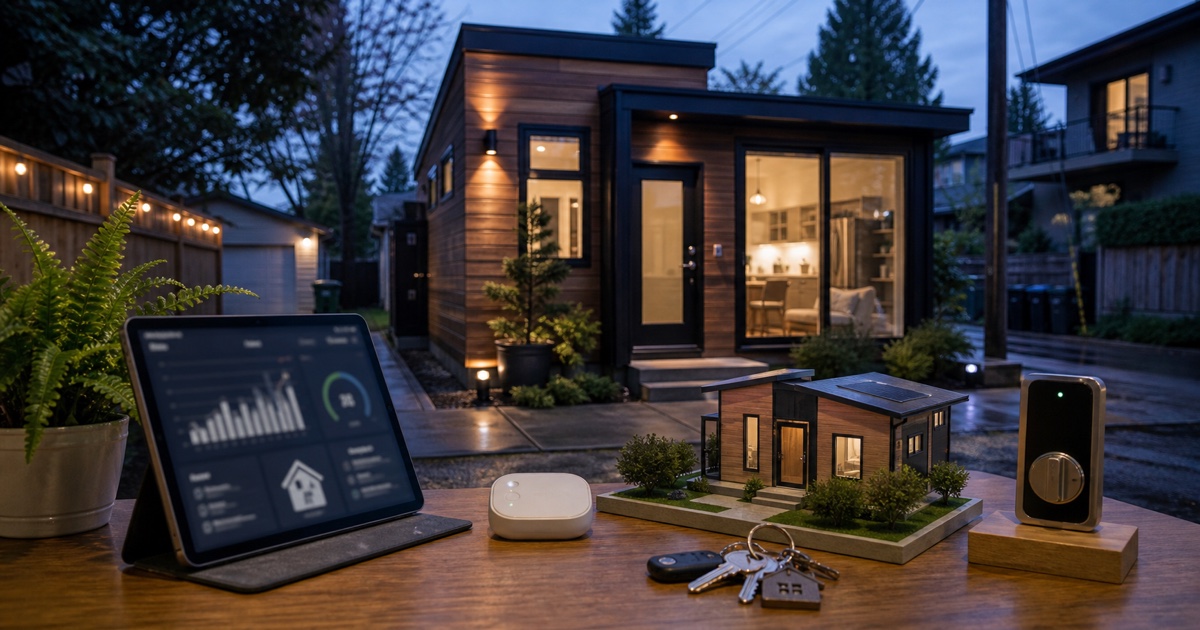
Smart Homes, Laneway Houses, and Missing Middle Housing: What Buyers Should Check First
A buyer-focused guide to smart-home features, laneway houses, and additional residential units. The article explains which upgrades improve day-to-day value, which require permit verification, and how to avoid overpaying for unproven future flexibility.
Updated 2026-05-18
This article is organized from 2 public sources, last fact-checked 2026-06-02; full sources and review status appear after the article.
Research Notes and Decision Checklist
Key takeaways
- A buyer-focused guide to smart-home features, laneway houses, and additional residential units. The article explains which upgrades improve day-to-day value, which require permit verification, and how to avoid overpaying for unproven future flexibility.
- Confirm the facts that apply to the specific property, city, and timing before relying on any general market observation.
- Bring unresolved legal, tax, financing, inspection, or insurance questions to the appropriate licensed professional.
Who this is for
Buyers, investors, families, and advisors who need a clearer way to organize Canadian real estate information before making a decision.
When to use PropertyLens
Use PropertyLens when you already have a target address and want a structured property report before deeper due diligence.
Decision checklist
- 1Identify the specific decision you are trying to make.
- 2Separate confirmed facts from assumptions that still need verification.
- 3Turn every unresolved issue into a follow-up question for the right professional.
Smart homes and laneway houses sound like the future of housing, but buyers should be careful with the word "future." Some features create real everyday value. Others are marketing labels. The difference comes down to permits, documentation, utility capacity, ease of maintenance, and whether future buyers will actually pay for the same flexibility.
The right question is not "Does this home have technology or extra-unit potential?" It is "Can I verify the feature, use it safely, maintain it, insure it, and explain it to the next buyer?"
Article Navigation
- Smart Home Value Is About Reliability
- Laneway Potential Must Be Verified
- Additional Units Are a Due-Diligence Topic
- Energy Efficiency and Comfort
- Buyer Checklist
- Frequently Asked Questions FAQ
Smart Home Value Is About Reliability
A useful smart home makes daily life simpler. It may include smart thermostats, leak sensors, monitored alarms, efficient lighting, EV charging readiness, or energy-use tracking. These can be attractive when they are documented and easy to operate.
The resale problem starts when the system is too customized. Buyers may discount features if they do not know who installed them, whether warranties transfer, which apps control them, or whether replacement parts are available.
Before assigning value, ask for:
- invoices and installation records,
- manuals and account-transfer instructions,
- warranty details,
- electrical permits where relevant,
- a simple list of what stays with the home,
- confirmation that critical systems still work without a subscription.
Laneway Potential Must Be Verified
Laneway housing, coach houses, garden suites, and additional residential units can expand housing supply and give owners more flexibility. In some provinces and cities, policy has moved toward allowing more units on residential lots.
But the property still has to qualify. A buyer should not treat a backyard or rear lane as automatic development value.
Key checks include:
| Item | Why It Matters |
|---|---|
| Municipal zoning | Determines whether the use is allowed |
| Lot access | A lane, driveway, or fire access path may affect feasibility |
| Services | Water, sewer, drainage, and electrical capacity can limit projects |
| Tree and site constraints | Mature trees, grades, or easements can change design options |
| Building code | Safety, fire separation, accessibility, and energy rules still apply |
A laneway idea is not the same as a permitted laneway project.
Additional Units Are a Due-Diligence Topic
Basement suites, secondary suites, and accessory units can be valuable, but they also create risk when documentation is unclear.
Buyers should confirm whether the unit is legal, authorized, or simply existing. This affects insurance, financing, rent assumptions, resale confidence, and sometimes municipal compliance.
The most important questions are practical:
- Was the unit built with permits?
- Does it have safe egress?
- Are fire separation and alarms documented?
- Is the electrical work permitted?
- Does the zoning allow the use?
- Is rental income being underwritten conservatively?
If those answers are missing, the unit should be treated as a risk item, not a guaranteed income stream.
Energy Efficiency and Comfort
Technology is most useful when it improves comfort and operating costs. Heat pumps, insulation upgrades, better windows, air sealing, and smart controls can matter more than flashy devices.
For older homes, ask whether upgrades were coordinated. A high-efficiency system installed into a leaky envelope may not perform as expected. A smart thermostat cannot fix poor insulation, aging ducts, or moisture problems.
The strongest homes usually combine:
- documented upgrades,
- clear permits,
- simple controls,
- efficient mechanical systems,
- good ventilation,
- and an owner manual that future buyers can understand.
Buyer Checklist
- Separate current value from future potential.
- Ask for permits, manuals, invoices, warranties, and transfer instructions.
- Confirm additional-unit rules with the municipality.
- Do not count rental income from a questionable suite as guaranteed.
- Check whether technology improves the home or only adds complexity.
- Price future construction potential only after zoning and service constraints are verified.
Extended Reading
Frequently Asked Questions FAQ
Q1: Do smart-home features automatically increase resale value?
A: No. Buyers usually value reliable, understandable systems more than complicated technology. Documentation, compatibility, and serviceability matter.
Q2: Can every lot support a laneway house or additional unit?
A: No. Rules depend on municipality, zoning, lot access, services, building code, and design constraints. Always verify before pricing future potential.
Q3: What is the biggest risk with unpermitted secondary units?
A: The unit may not meet safety, zoning, insurance, financing, or resale expectations. Buyers should confirm permits and professional advice before relying on rental income.
Next Steps
Smart-home and laneway potential can be valuable, but only when the paperwork, physical constraints, and future buyer demand line up. Treat every claim as something to verify, not something to admire.
Check future-use risks with PropertyLens →
About the Author: InsightEstate editorial team, specializing in housing policy, renovation due diligence, and address-level risk analysis.
Disclaimer: This article is general information, not legal, planning, building-code, insurance, or investment advice. Confirm local rules with the municipality and qualified professionals.
Sources and Fact-Check Status
- Home energy efficiency (Natural Resources Canada · 2026-06-02)
- Buying a home (Financial Consumer Agency of Canada · 2026-06-02)
Related Reading
Vancouver and BC Regional Intelligence
BC Policy and Land Use
The End of Single-Family Zoning: How BC Bill 44 (SSMUH) Reshapes Real Estate Investment
BC Bill 44 is not just a regulatory change; it is a total reshuffling of land value. This article provides a deep dive into the battle between increased density and development profit.
Condo and Strata
Pre-Construction Homes in Canada: Deposits, Delays, Interim Occupancy, and Buyer Risk
Pre-construction can offer choice and staged deposits, but buyers need to understand contract risk, closing adjustments, delays, interim occupancy, warranty coverage, financing, and market changes before signing.
Renovation and Building Risk
The Renovation Permit ROI: Controlling Costs and "Legalizing" Your Premium
Renovation is more than an aesthetic project; it is a regulatory game of chess. No-permit work is a debt; permitted work is an asset.
InsightEstate.CA
Return to Property Intelligence Lab for more Canadian real estate research and practical analysis.